Let’s talk council and who does what

I’m always here to listen, help navigate the system and advocate for our community at the council table. Photo supplied
By Howick Ward Councillor Bo Burns
Hi east Auckland, I thought I’d start the year by clearly explaining the difference between my role as your elected Auckland councillor and the role of the Howick Local Board, as this is one of the most common questions I’m asked.
As a councillor, I sit at the governing body table. My role focuses on big, Auckland-wide decisions such as transport, water infrastructure, rubbish and recycling, bylaws, long-term planning and the overall budget and cost savings.
Of course, I also advocate strongly for east Auckland’s needs when those regional decisions are made.
The Howick Local Board is responsible for very local matters. This includes parks and playgrounds, libraries, community facilities, local events and representing neighbourhood views on local projects.
They’re your first point of contact for issues that affect your immediate community.
If you have a local issue, you can contact the Howick Local Board at [email protected].
For service-related issues such as noise complaints, rubbish, dog control or road problems, contact Auckland Council directly on 09 301 0101 or log it online at www.aucklandcouncil.govt.nz so there’s a reference number.
I’m always here to listen, help navigate the system and advocate for our community at the council table.
As I always say: “This role isn’t about my opinion. It’s about listening first, then advocating strongly for what my community needs and expects.”
Follow me here to hear about regional, local news and events: www.facebook.com/boburnsnz.
Have a great February, I’m excited for an exceptional 2026 for all our community.
Regards, Bo.
You can also read the full article here:
https://www.times.co.nz/news/lets-talk-council-and-who-does-what/
Auckland Council votes on proposed property rates cap

Howick ward councillor Bo Burns says she supports capping Auckland’s property rates.
The Howick ward’s two councillors have voted in favour of a proposed cap on property rates at Auckland Council’s governing body meeting today.
Voting in support of the rates cap on February 3 were Howick ward councillors Maurice Williamson and Bo Burns as well as councillors Mike Lee, Greg Sayers, Ken Turner and John Watson.
But the vote was lost as it was opposed by mayor Wayne Brown, deputy mayor Desley Simpson, and 12 other councillors. Councillor Christine Fletcher abstained.
The Government last year said Cabinet would consider options to control property rates rises, including possibly capping rates through legislation.
An RNZ-Reid Research poll released late last year found 75 per cent of respondents support placing a cap on the amount councils can increase property rates by each year.
Fourteen per cent of people polled opposed a rates cap while 11 per cent did not know.
In a social media post following the vote, Burns says she wants to be clear about why she supports the proposed rates cap from the Government.
“It comes down to one thing above all else – the people who elected me and the households I represent.
“Seventy-five per cent of people opposed as you will see in the RNZ poll.
“I absolutely accept the policy isn’t perfect. There are flaws, especially around process.
“The way councils may need to apply for exemptions or funding for long-term infrastructure projects is not ideal yet and needs far more clarity.
“I am not afraid to say that, and we shouldn’t have to beg to nationwide MPs for money for local projects.”
Burns points to concerns around rates raised by councillors including affordability; nice-to-haves versus necessities; the need to be honest about what’s essential and what’s not; and the fact savings are real, not theoretical.
“There’s been a lot of talk about ‘only a couple of dollars a week’, but the Taxpayers’ Union rates cap dashboard shows a four per cent cap could save around $36.85 a month for the average household.
“That’s not a can of baked beans. That’s a basket of staples, or yes, even a bottle of Mumm if that’s your thing.”

Howick ward councillor Maurice Williamson also voted in favour of the rates cap. File photo supplied
Burns says the Government needs “skin in the game”.
“Central Government does not pay rates on many of its buildings, including universities and Government assets.
“If it did, Auckland alone would receive around $38 million a year. That conversation matters.”
And she says Auckland shouldn’t have to keep “begging”.
“Having to constantly go cap-in-hand to ministers and MPs for Auckland projects doesn’t sit well with me.
“We need clearer, less bureaucratic pathways for funding major infrastructure without endless red tape.
“Councils will be able to apply to exceed the cap for major, critical infrastructure.
“That process must be clear, transparent, and tied to long-term plans with projects clearly identified and justified and fast track approval so we are not held up by red tape Government decision-makers.
“That’s where the work still needs to be done in my mind.
“At the end of the day, I supported the rates cap because it puts pressure where it belongs, but have concerns about process and how we manage our large infrastructure and services.
“I’m also not afraid to bring big ideas to the table for other income streams or find cost savings.
“Both council and Government need to be efficient, to find new revenue streams, and to stop passing every cost straight on to ratepayers.
“But I won’t apologise for standing up for those that voted for me, and also talked to me all through my campaign and continue to daily about rates.”
Responding to the council voting against the proposed rates cap, Pakuranga MP Simeon Brown says: “Auckland Council’s decision to vote against a proposed cap on property rates shows the majority of councillors are out of touch with Aucklanders.
“I want to acknowledge Howick ward councillors Maurice Williamson and Bo Burns for standing with east Aucklanders by supporting the proposed rates cap.
“The Government is focused on keeping costs down for families, which is why we have agreed to progress a rates cap to help councils keep increases under control and ease pressure on household budgets.
“Auckland ratepayers deserve a council that lives within its means, focuses on the basics, and is accountable to the people it serves, and our decision to enact a nationwide rates cap will help ensure exactly that.”
Disclosure: Bo Burns is the owner of Times Media.
Looking ahead to big issues in 2026

“Strong collaboration between governance levels makes a real difference to outcomes on the ground and what matters most to our residents.” Times file photo
By Howick Ward Councillor Bo Burns
Happy New Year to our fabulous east Auckland community.
I hope you all enjoyed a restful and well-earned summer break with family and friends.
I certainly did and I’m returning refreshed, energised, and ready to hit the ground running in 2026.
This year will be about relationships, collaboration, and delivery. My focus is firmly on building strong working relationships with key leaders across Auckland Council, engaging regularly with ratepayer and resident groups, and maintaining open and consistent communication with our community.
These conversations are essential to ensuring local voices are heard early and often.
I’ll also be working closely with Bruce Kendall, chair of the Howick Local Board, alongside all local board members, to ensure alignment between local priorities and governing body decisions.
Strong collaboration between governance levels makes a real difference to outcomes on the ground and what matters most to our residents.
Equally important is constructive engagement with our four local Members of Parliament, Parmjeet Parmar, Simeon Brown, Christopher Luxon, and Nancy Lu.
My belief is simple. When local and central government work together on the big issues, we get better and faster results for our community.
One of the most significant issues this year to keep pushing for will be Proposed Plan Change 120, which relates to housing intensification and resilience.
With the general election ahead, it’s critical we keep pressure on decision makers and ensure community feedback continues to be front and centre.
The PC120 process follows several key stages. Public consultation closed on December 19, 2025.
Further submissions open on February 26 and close on March 18, followed by technical assessments and hearings.
I’ll continue advocating for balanced outcomes that protect neighbourhood character while addressing housing needs.
I currently hold two roles within council, which allows me to work across both community outcomes and financial responsibility. I’m deputy chair of the Community Committee, where the focus is on social well-being, community facilities, and local services.
I also sit on the Expenditure Control and Procurement Committee, ensuring decisions are delivered on time, within budget, and with value for ratepayers at the forefront, as well as being part of all the general committees that all councillors attend.
It will be a busy year, with many important decisions to be made. I remain committed to working collaboratively, being visible, and ensuring east Auckland continues to receive strong representation.
If you wish to get in touch, please feel free to connect me here: www.facebook.com/boburnsnz. I’m always happy to hear from you.
I wish you all the very best for a fantastic start to 2026. It’s going to be a great year and I look forward to seeing you out and about in our community.
Grants in New Zealand: Where to Apply, What They Fund, and How to Give Your Application the Best Chance

If you’re involved in a local club, school, charity, sports team, arts group, community project, or volunteer initiative, you’ll know one thing for sure: good people are doing great work… but funding is often the missing piece.
I get asked all the time, “Bo, where do we actually apply for grants?” and “Which ones are best for what we need?”
So, I’ve pulled together a helpful guide on where to apply, what each fund typically supports, and some best practice tips to make your application stand out.
The “Big Buckets” of Funding
Most grants fall into one of these categories:
✅ Community projects and wellbeing
Think: community gardens, equipment, safety upgrades, local improvement projects, services that help people.
✅ Sport and recreation
Think: uniforms, gear, travel, coaching, facilities, tournaments.
✅ Arts and culture
Think: events, workshops, materials, performances, local creative projects.
✅ Education and youth
Think: programmes, mentorship, resources, learning support, youth development initiatives.
✅ Environment and sustainability
Think: restoration work, waste minimisation, education programmes, community initiatives.
The Best Places to Apply for Grants
Below are some of the most common and useful funding options across NZ. I’ve added what they’re usually best for so you can apply strategically.
Grassroots Trust
Great for: community groups, schools, not-for-profits, equipment, projects, and local initiatives.
Apply here: https://www.grassrootstrust.co.nz/apply-for-a-grant/
Eligibility info: https://www.grassrootstrust.co.nz/apply-for-a-grant/grant-decision-criteria/
Transpower Community Care Fund
Great for: community projects with lasting benefits in certain locations, and up to $15,000.
Note: They don’t fund events, salaries, rent, or operational costs.
Main info: https://www.transpower.co.nz/communitycare-fund
(They often run Expressions of Interest in April and October.)
Lottery Grants (Lotto NZ)
Great for: capability, capacity building, and community projects.
How to apply: https://mylotto.co.nz/lottery-grants
Lottery Grants Board overview: https://www.communitymatters.govt.nz/lottery-grants-board
Helpful note: informal groups can sometimes apply for grants under $10,000
NZCT Pokie Grants (New Zealand Community Trust)
Great for: community groups, schools, sports clubs, not-for-profits, equipment, uniforms, programmes and local initiatives funded through gaming (pokie) proceeds.
Apply here: https://www.nzct.org.nz/grants/
NZCT overview: funding is generally returned to the areas where the funds are raised, so it’s best to apply if there are NZCT venues operating in your community.
Eligibility info: https://www.nzct.org.nz/grants/our-grants-criteria/
Foundation North
Great for: bigger community funding in Auckland and Northland, including quick response grants and larger community grants.
Apply here: https://www.foundationnorth.org.nz/apply-for-funding
Grant types and timeframes: https://www.foundationnorth.org.nz/application-guide/applying-for-a-grant
Auckland Council Community Grants (Local Boards)
Great for: local community projects, events, programmes, equipment, and initiatives that benefit your neighbourhood. These grants are run through Auckland’s Local Boards and are a great option for schools, charities, clubs, and community groups.
Apply here: https://aucklandcouncil.smartygrants.com.au/
Support info: The site includes applicant help guides and you can contact a funding advisor if needed
Trusts and Funders to Know (Great to Research and Match to Your Cause)
These are common grant sources many NZ groups use, depending on what you’re doing:
NZCT (New Zealand Community Trust)
The Lion Foundation
Rotary Foundation
The Tindall Foundation
Todd Foundation
JR McKenzie Trust
Hugh Green Foundation
Next Foundation
Public Trust
Perpetual Guardian
Len Reynolds Trust
Wayne Francis Charitable Trust
DV Bryant Trust Board
Working Together More Fund
Sport New Zealand
You’ll also see many community groups using fundraising platforms like:
Givealittle
PledgeMe
These are great when you want your community to chip in and you can actively promote it online.
What Grants Usually Cover (and what they often won’t)
Most funders love supporting:
✅ Equipment and resources
✅ Community programmes and services
✅ Facility improvements
✅ Projects with a clear community benefit
✅ Targeted initiatives with a defined outcome
Many funders will not fund:
❌ “Business as usual” operating costs
❌ Salaries and admin (some do, but many don’t)
❌ Projects already completed
❌ Costs without quotes or clear budgets
❌ Vague ideas with no clear plan
Transpower is a good example, they clearly state they won’t fund events, salaries, admin, rent, volunteer support, training, equipment hire and similar operational costs.
Best Practice Tips to Increase Your Chances of Approval
Here are the habits I see in successful grant applications.
1. Apply early (do not leave it to the last minute)
Early applications allow time for clarification, extra documents, and fixing missing details before it’s declined for being incomplete.
2. Match the funder to the purpose
Don’t try force a project into a fund that isn’t aligned.
Find the funder that naturally fits what you’re doing.
3. Make it crystal clear what you need
Be specific:
What are you buying or delivering?
How many people benefit?
What changes in the community because of it?
4. Use simple numbers and clean budgets
The best applications are easy to understand:
Total project cost
Amount requested
What you’re contributing
Quotes included
Timeline for delivery
5. Show impact, not just need
Instead of “we really need this”, explain:
what it will improve
who it supports
what problem it solves
what success looks like
6. Keep documents up to date
Common requirements include:
bank account proof
legal structure or charity registration
financial statements
committee list
two quotes
invoice details
If these are old or inconsistent, it slows everything down.
7. Make it easy for them to say yes
A great application reads like:
✅ clear
✅ planned
✅ reasonable
✅ community focused
✅ achievable
✅ measurable
My “Grant Checklist” Before You Hit Submit
Before submitting, double check:
✅ The funder is the right match
✅ Every question is answered
✅ Attachments are included
✅ Your budget totals match
✅ Quotes are recent and clear
✅ Your timeline makes sense
✅ You’ve explained who benefits and how
✅ You’ve included the “why now” urgency
If You’re Not Sure Where to Start
If you’re a club or group and you’re overwhelmed, start here:
Make a list of exactly what you need (equipment, facility, programme, uniforms, etc)
Pick 3 grant providers that match that purpose
Prepare your “core documents pack” once so you can reuse it
Apply consistently throughout the year
Grant funding is one of those things that gets easier the more systems you put around it.
Final Note
Local groups are the heartbeat of our community. The sports clubs, schools, volunteer organisations, arts programmes, and charities are doing the real work on the ground every day.
If you’re one of those people putting your hand up to lead, organise, coach, or build something better, I see you and I appreciate you.
If you found this helpful, feel free to share it with your club committee, PTA, coaches, or community group chat.
Let’s keep supporting the people who support our community. 💛
Bo
RMA replacement: Chris Bishop set to deliver New Zealand’s biggest ever tax cut
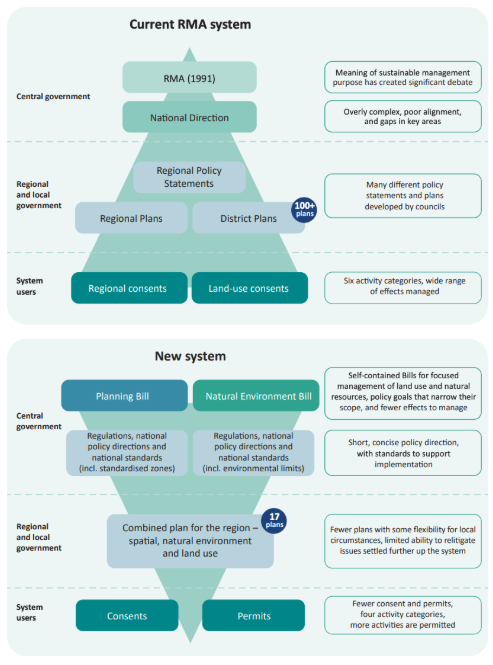
Government unveils major overhaul of the RMA
What the changes could mean for housing, growth and everyday New Zealanders
The Government has released its long awaited replacement for the Resource Management Act, signalling what officials say is the most significant shift in planning and environmental law in decades.
The announcement followed a Beehive lock up where about one hundred journalists and analysts spent the day working through early material on the reforms, including the new Planning Bill and Environment Bill which total nearly eight hundred pages.
Planning law is always detailed and technical, so it will take time to understand the full implications. However, the information provided so far, which includes a forty page overview, eleven fact sheets and several ministerial statements, gives a clear early picture.
For many New Zealanders, the RMA has long been viewed as a handbrake on housing affordability and infrastructure development. Ministers Chris Bishop and Simon Court say the new system is designed to remove unnecessary barriers, reduce duplication and provide clearer direction across regions.
A stronger national direction
The reforms propose a more directive planning structure with central government setting consistent national rules and standards. Local communities would then apply these to their wider areas. Officials say this funnel approach tightens focus at each stage of the process, reducing debate, speeding up decisions and giving property owners greater certainty.
Key changes at a glance
The Government has highlighted several core features of the new system. These include
Fewer effects managed
A range of effects that currently require assessment will be removed from scope. These include retail distribution impacts, internal site matters, visual amenity, competition issues and the financial viability of a project.
Fewer consents required
Low impact activities will no longer need resource consent and activity categories will be simplified.
More proportionate conditions
Any conditions placed on consents must be both necessary and proportionate.
Fewer plans
More than one hundred existing district and regional plans will be consolidated into seventeen regional combined plans. These plans will integrate spatial planning, land use rules and natural environment priorities in one place.
Thirty year spatial plans
Each region will develop long term spatial plans identifying growth areas, key infrastructure corridors and areas that require protection.
Faster plan making
The current six to seven year average plan making timeframe would reduce to around two years.
Standardised zones
The range of more than one thousand bespoke zones used around the country will be replaced with a consistent national set.
National standards
A comprehensive suite of national standards will guide common activities and reduce the need for individual consents.
Regulatory relief
When councils impose major restrictions such as significant natural areas or heritage protections, they must provide practical relief mechanisms.
Clearer consultation requirements
There will be clearer guidance on who must be consulted and at what stage of the planning process including iwi.
Faster conflict resolution
A new Planning Tribunal will handle straightforward disputes more quickly and at lower cost.
Clear environmental limits
Environmental limits will support community decision making and reduce unnecessary application work.
Consistent enforcement
National oversight will ensure enforcement is fair and consistent across the country.
What happens next
The bills will go through the Select Committee process in the first half of next year where further refinement is expected. Ministers have signalled a commitment to ensuring that property rights, housing supply and infrastructure development sit at the heart of the new system.
For residents interested in understanding the proposals in more detail, the Government has released a useful overview document that outlines the reforms and the rationale behind them. https://environment.govt.nz/assets/publications/RM-reform/Our-future-resource-management-system-overview.pdf
I will continue to follow this closely in my role as your Howick Ward Councillor and will keep our community updated as the process progresses.
Auckland Council backs more Eden Park concerts ‘in principle’ after debate
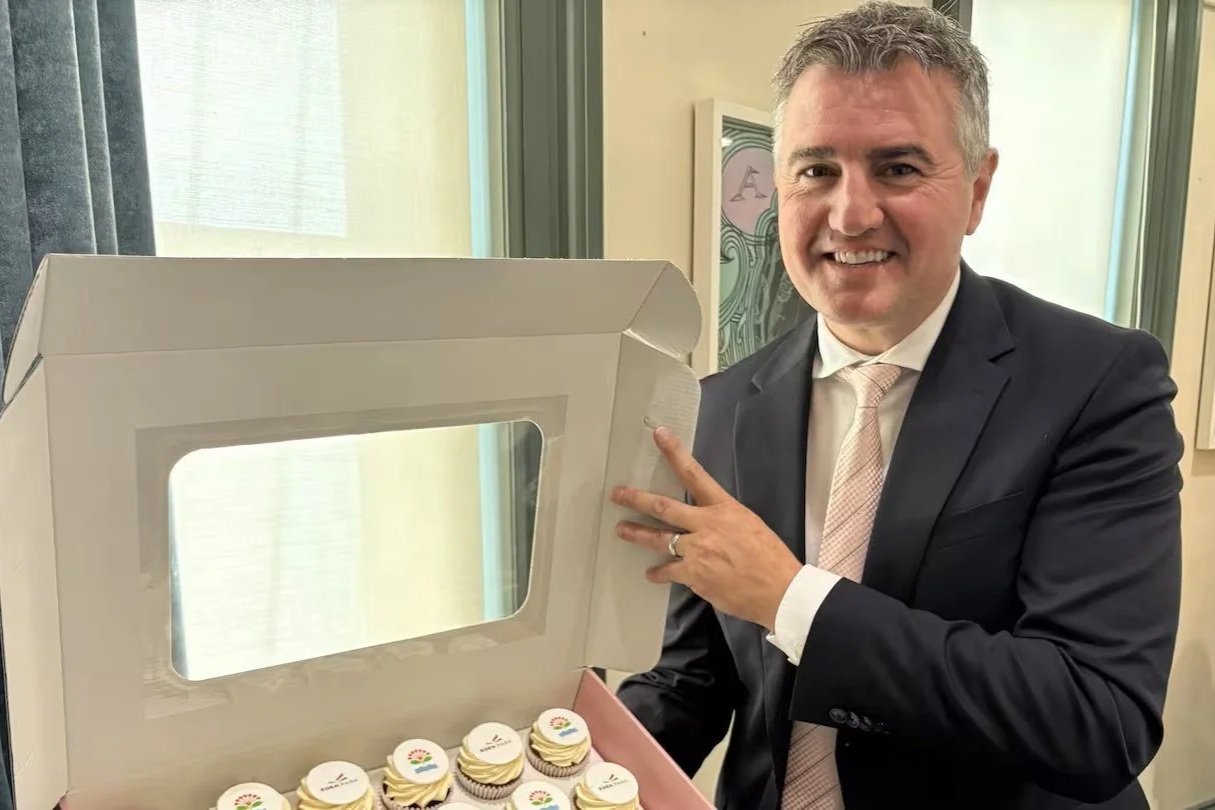
Nick Sautner, Eden Park chief executive, with his gift to Auckland Council of specially decorated Eden Park and council cupcakes. Photo / Simon Wilson
Auckland Council has endorsed the plan for more concerts at Eden Park – “in principle”.
It has also decided to ask the Government to consider a range of issues about how the plan will work. And in a long meeting on Thursday, it went through a period of some confusion before making it clear what it was trying to say.
The plan for more concerts comes from the Minister of Resource Management Reform Chris Bishop and is based on a report from the Ministry for the Environment.
Bishop has proposed increasing the total number of concerts allowed per year from 12 to 32. He also wants the current ban on Sunday concerts lifted, along with extended hours and other more liberal conditions.
The vote was 20 in favour, with Waitematā and Gulf councillor Mike Lee the only one against.
Early in the meeting, the councillors heard from Margi Watson, chair of the Albert-Eden Local Board, which voted 4-3 last week to oppose the plan.
Watson explained that her board supported some liberalisation of the rules around concerts at Eden Park, but wanted Sundays to remain free and a “respite” from concerts on at least one weekend in every five.
The board was also worried about damage to the streets from the extra trucks packing the shows in and out.
It pointed out that in 2024, an Independent Hearings Panel had proposed a maximum of 12 concerts, calling it “right at the edge of acceptability”. The council at the time had accepted this.
Deputy Mayor Desley Simpson asked Watson if the board’s position was based on the views of the wider community.
“I ask this because I’ve read the results of the survey done by the local MP and there’s a disparate outcome from your position.”
A recent survey by Mt Albert MP Helen White showed 80% support for more concerts. Watson said the board’s view was its own.
“It will be interesting to see what comes back from the public consultation,” she said.
Watson also said the board has heard from local residents who say they can’t hold a barbecue on a Saturday afternoon when the All Blacks are playing because “their in-laws can’t drive into the area and park”.
Councillor Bo Burns from Howick summed up the feeling around the council table when she asked: “What’s more important, 15 noisy late nights or the businesses being viable?”
“I think it’s 30 nights,” Watson said.

Specially decorated Bluebells cupcakes presented to Auckland Council by Nick Sautner, Eden Park chief executive. Photo / Simon Wilson
Eden Park chief executive Nick Sautner also addressed the meeting. He began by tabling a large box of cupcakes made specially for the occasion by Bluebells, a local caker.
There were many jokes about bribes.
Sautner outlined why Eden Park was keen to host more concerts and other events. Despite making a $4.2 million profit this year, it is projecting a mere $145,000 profit in 2026. Part of the reason, he said, is that the stadium can’t hold more events.
“The research is compelling. We’ve got a billion-dollar asset that is being underutilised.”
Sautner also explained how valuable Eden Park events are to nearby hospitality businesses on Dominion Rd and in Kingsland.
“The Dominion Rd business association has told me that when Coldplay was here, dining on Dominion Rd surged 22%.”
Councillor Lotu Fuli of Manukau said it wasn’t just local businesses that benefited. She’d been in the Sylvia Park shopping centre the day after the Metallica concert this month and seen “so many people in their black Metallica T-shirts carrying all their shopping bags”.
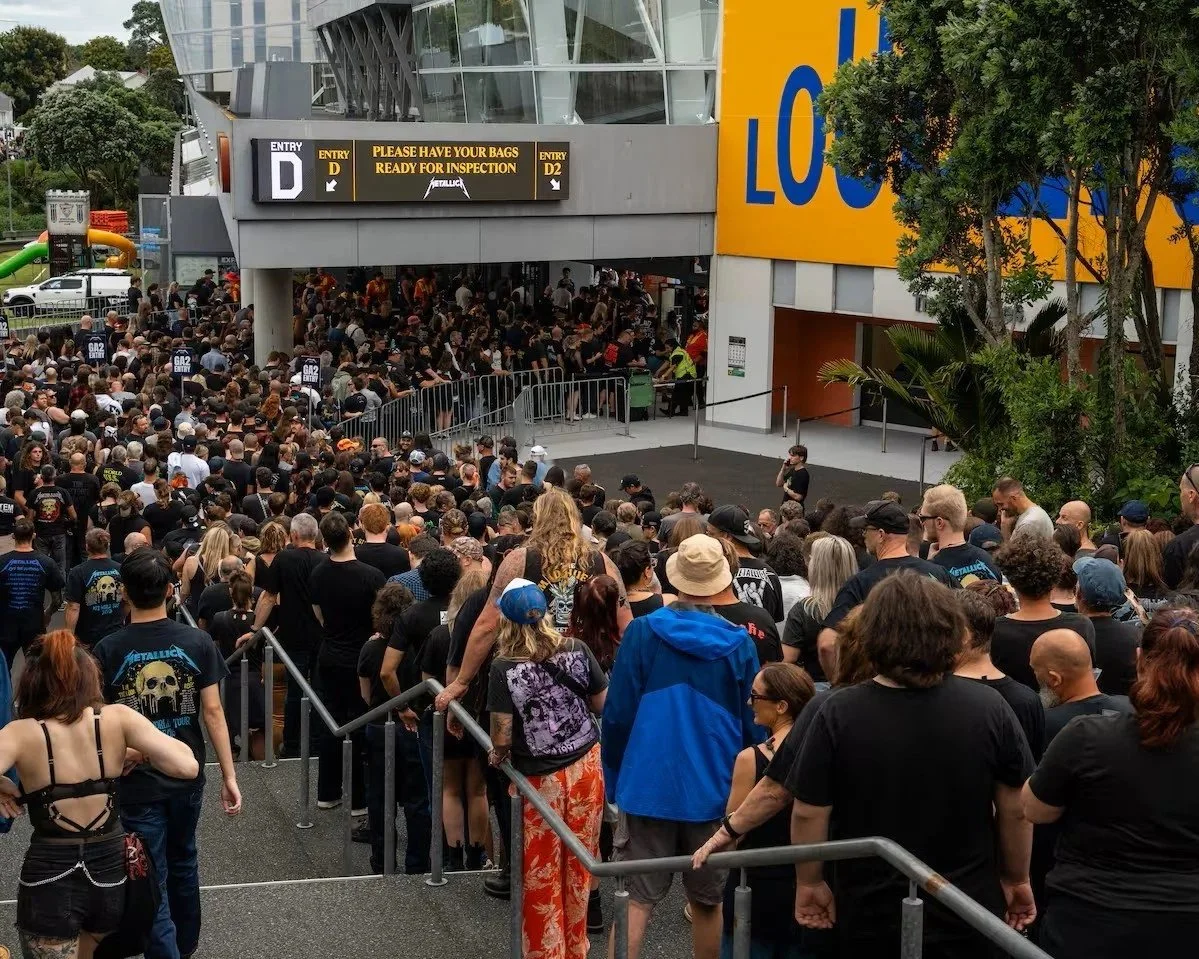
Huge crowds queue to get into Metallica at Eden Park. Photos / Corey Fleming
Sautner said he made no apologies for wanting the Eden Park experience to keep getting better.
“We need to be competitive with the east coast of Australia and that means we have to be continually upgrading our facility.”
Simpson quoted the Government-commissioned report that said council restrictions on Eden Park activity had cost the city $432m in lost revenue.
“We need to do everything we can to let Eden Park realise its potential. I think these recommendations do that.”
Councillor Andy Baker of Franklin pointed out that the previous council had strongly supported the Eden Park 2.1 plan, which proposes a roof for the stadium and many other improvements to the visitor experience.
The minister’s proposal, he said, was in line with that decision.
“We need to make some hard decisions,” Baker said. “We need to decide if we’re going to accept Eden Park 2.1 and get on board with it, or are we going to keep muddling along.”
When North Shore councillor Richard Hills introduced the debate, he said: “Basically we’re supporting Eden Park, supporting more events.”
But the other North Shore councillor, John Gillon, pointed out that the motion they were being asked to vote on, which ran to more than a page, didn’t say that.
He said although it made lots of good points, “Where’s our view on extra concerts and Sundays and extended hours and all the rest?”
After some wrangling, Waitākere councillor Shane Henderson suggested the councillors add a sentence making their position clear.
They agreed to add a sentence expressing support for more concerts at Eden Park, “in principle”.
But the council also agreed to tell the minister that extra events will mean extra traffic management plans, which the council does not want to pay for. And the council still wants the Government to allow a bed-night levy, to provide funds to pay for all the other costs council faces when the city swells with people.
Lee disagreed with all this. “Should we not be endorsing the local board’s resolution?” he asked.
“No,” Mayor Wayne Brown said. “It’s crap.”
Public consultation on Bishop’s plan closed on November 19 and he is now awaiting the result.
Simon Wilson is an award-winning senior writer covering politics, the climate crisis, transport, housing, urban design and social issues, with a focus on Auckland. He joined the Herald in 2018.
Why I Oppose the Fortnightly Rubbish Collection Trial
Auckland Council has released the results of public consultation on the proposed six-month trial of fortnightly kerbside rubbish collection. Across the trial areas and the wider region, the message from Aucklanders was consistent and strong.
Out of 5,086 submissions, 78 per cent opposed the trial, while just 18 per cent supported it. Even with in-person engagement, the community remained divided, with 41 per cent opposed and 35 per cent in favour.
I oppose this proposal.
Why? Because our community deserves core services, delivered consistently, on time, and within the rates we already pay. Aucklanders are facing increasing costs across the board and they expect their council to get the basics right. Weekly rubbish collection is a fundamental service, especially for families, multi-generational households, and those already dealing with capacity or hygiene issues.
While reducing waste to landfill is important, trialling reduced services before we fix existing service levels sends the wrong message. Ratepayers are already paying more and receiving less. That isn’t acceptable.
Council will now consider the consultation feedback in December. I’ll continue advocating for practical, community-focused solutions that reflect what Aucklanders are clearly asking for, reliable, high-quality services that match the rates they pay.
Auckland councillor Bo Burns pushes review of city's flat rates system
Bernard Orsman
Auckland Reporter · NZ Herald · 24 Nov, 2025 05:00 AM ·
New Auckland councillor Bo Burns has raised the thorny issue of flattening the rates system, a change favouring owners of higher-value properties.
Mayor Wayne Brown said it was too early to discuss the issue, but he looked forward to hearing the views of fellow elected members.
Senior councillor Greg Sayers has backed the proposal, placing it on the agenda for a budget committee workshop he chairs on December 3.
After barely getting her feet under the table as a councillor for Howick, Burns issued a social media post two days ago, headed “Let’s Talk Rates – and More Importantly, Let’s Do Something About Them”.
“Over the past few weeks, I’ve had multiple meetings, including a dedicated session with council’s specialist rates team, to dig deep into how our residential and business rates are structured, what levers we actually have, and where the pressure points are,” she said.
It followed her maiden speech, where one of Burns’ key priorities was to review the structure and framework of rates, specifically the uniform annual general charge (UAGC).
“It’s one of the biggest issues raised by Aucklanders to all of us over the recent election campaign. There are levers available to us, so let’s use them, or at least bring them to the table to discuss,” she said in her speech.
The UAGC flattens the rates system by shifting more of the rates burden on to lower-value properties and reducing the share paid by higher-value properties.
In practical terms, it means households in modest homes pay higher rates, while households in more expensive homes pay relatively lower rates.
In her post, Burns noted the UAGC has remained unchanged at $604 since 2012, holding steady at 13.9% of the rates take despite the council being legally permitted to set it as high as 30%.
She said the last meaningful discussion on the UAGC at council was in 2016 – a decade with no real conversation about one of the biggest issues for households and businesses.
Burns has requested a rates review be part of next year’s mayoral budget – a draft of which will be released before Christmas – or included in the 10-year budget the following year.
Burns told the Herald she favoured raising the UAGC.
She said the issue appeared to be gaining traction and would come to the table, with councillors examining the levers and options for a fairer model.
Brown said Burns was new and he was pleased to see her interest in rates, but also wanted to hear from other elected members.
“It is a bit early to be talking about this. It’s a matter for the long-term plan when we get to it,” he said.
Sayers said he would gauge the temperature among councillors on December 3 before placing it in either next year’s budget or, as seems likely, the long-term plan the following year.
“It’s appropriate to have another look at it [UAGC],” said Sayers, whose personal view was to review and increase the UAGC.
Labour councillor Josephine Bartley said she had read the 2016 report, when the council decided not to increase the UAGC partly because of equity concerns, and was worried about the implications for owners of lower-value properties.
She said it would be important to discuss the UAGC at the governing body before any decisions are made.
City Vision councillor Julie Fairey said, politically, she favoured a lower UAGC and that it was timely to consider the issue with solid information and decide whether it should be consulted on.
Fairey said she was not afraid to examine the numbers and test whether the current level remained appropriate.
In theory, the UAGC was the council’s only tool for varying charges according to means, so her instinct was to keep it low, though $604 may not be the right figure.
She noted the UAGC was only one component of rates, which accounted for about 38% of the council’s income, and argued context is crucial to the discussion.
Fairey said she was keen for the council to develop new tools to boost non-rate income and reduce reliance on rates, but said this would require support from the Government.
Deputy Mayor Desley Simpson, who represents the wealthy Ōrākei ward, said the UAGC had not been considered for some time and she would be happy to listen to advice about whether the balance in the rating system is correct to ensure equity between ratepayers.
Sign up to The Daily H, a free newsletter curated by our editors and delivered straight to your inbox every weekday.
Let’s Talk Rates — And More Importantly, Let’s Do Something About Them
RNZ INTERVIEW HERE:
One thing that always comes up in election campaigns is rates. Yet, how often do we really take action to fix them? Not nearly enough. That’s why I’m stepping in, and stepping up.
Since being elected to represent East Auckland, I’ve refused to sit back and watch rates become an ever-bigger burden on our households and businesses. Over the past few weeks I’ve immersed myself in the topic, met with the Council’s specialist Rates Team, and dug into how our residential and business rates are structured, what levers are in place, and where the pressure points lie.
In fact, I’ve formally requested that this work be included in the Mayor’s Annual Plan. If it’s not ready this year, I’m pushing for it to go into the Long-Term Plan. Because our city deserves a proper conversation about rates, We need action not just talking.
It comes down to fairness. In our current system the so-called Uniform Annual General Charge (UAGC) is a flat fee every household pays, (Currently $604 per household) regardless of income, property size, or services used. Meanwhile, the rest of your rates bill hinges on property value and “targeted rates”.
The Government has signalled a plan to cap rates, which is a good start. But to truly make things fairer, we also need to revisit the Rating Act (Section 21 in particular).
Why should the UAGC go up? Because less reliance on property value means fewer unsustainable jumps in your bill, especially when your area has just been re-valued. Because ability to pay and services received matter more than land price. Because a fair system underpins a healthy community.
Why this matters Aucklanders
Many households in East Auckland, including Howick, Cockle Bay, Rodney & Franklin, are facing rate jumps that just don’t add up. When property values surge and the UAGC remains the same, the burden falls heavily on those already paying above the average. That’s unfair.
What I’m doing next
Continuing to educate myself around everything to do with rates. (residential and business)
Advocate for a full review of the rating system in our city.
Engaging with Government to work on their changes
Talking with the community, if you have concerns, questions or want clarity on how this affects your household, I’m here. [email protected]
Thanks for reading, and thanks for engaging. Let’s change the way we all pay for our city, together.
Mental Health: Reaching Out Matters More Than You Know

Mental health challenges touch far more people than we often realise. According to I Am Hope, around 1 in 5 young Kiwis will experience significant mental distress each year, and New Zealand loses more than 600 people to suicide annually. Even more heartbreaking, every day in NZ, at least 14 young people are referred for acute mental health support, yet many never get the help they need.
Reaching out is not a sign of weakness — it’s the strongest step anyone can take. Whether you’re struggling, or someone you love is, please know you’re not alone. Support is available 24/7, and there are real people on the other end who genuinely care.
If you ever need someone to talk to, you can reach out to me anytime. And if you or your family need practical help, East Auckland has incredible local food banks and church support networks:
👉 https://www.times.co.nz/advert-category/local-food-banks-east-auckland/
Where to get help:
• 1737 – Call/text 1737 to talk to a counsellor
• Anxiety NZ – 0800 ANXIETY
• Depression Helpline – 0800 111 757 or text 4202
• Lifeline – 0800 543 354
• Rural Support Trust – 0800 787 254
• Samaritans – 0800 726 666
• Suicide Crisis – 0508 828 865
• Yellow Brick Road – 0800 732 825
• thelowdown.co.nz – Text 5626
• What’s Up (ages 5–18) – 0800 942 8787
• Youthline – 0800 376 633 or text 234
• Aoake te Rā – 0800 000 053
If life is in danger, call 111 immediately